|
|
|
|
|
|||
|
|
||||||
|
|
|
|
||||
|
|
||||||
|
|
My
Musical Life |
|
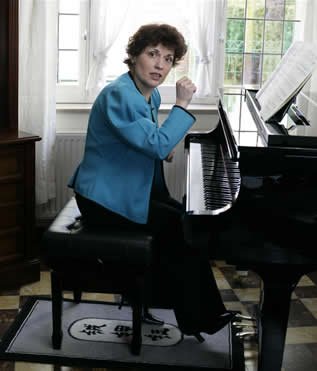
photo by Steven Kennedy |
|
|
|
|
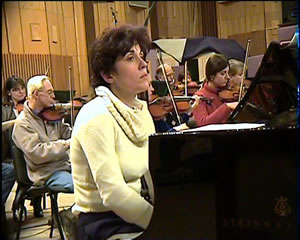
My first piano lesson at was at age 8 from Natalie
Sherwood who, some 40 years later at the age of 84, was still teaching,
walking 2 km from the Metro, morning and night, winter and summer. She advised
my mother to purchase of my 1890's Schroeder which I still love and have
today, of all my teachers, is� she that
I most respect, for her strong opinions about understanding the music and
believeing what you play; and because she was a student of Konstantin
Igumnov. Forty years after my first lesson� she�
can still severely reprimanded me for my bad habits in use of pedal. After Natalie� I moved the Gnessin Junior school
and Musa Denisova en route to the After qualification I married and left In 2000 I found the music of Paul Pabst and started
to research and write about him and his musical history, I discovered not
only one of the greatest pianist, but a mystery. I found that there was a
deliberate change in piano performance teaching about the time of the death
of Tchaikovsky and that a new, non romantic method was imposed in the
Conservatoire from 1897, that still survives today. This style�
leaves us with a paradox - how can you play music, written for
romantic performance with free rubato, separated hands and multi voices,
using the non romantic, regimented method which requires perfect precision
and limited rubato, perfect synchronization and ever increasing speed ? I wonder how students, from China and eastern
musical cultures that are firmly based in voices and stories, can understand
and enjoy playing the western classics, if they follow the conventional style
of velocity and accuracy and subjugation of voices.�� When I was diagnosed with MS, I thought my
performing career would end but I started play for MS and Neurological causes
in I now understand that �
12 Half tones are part of our neurology �
tonalities are not harmonicaly unique �
pitch height establishes tonality �
the brain achieves pleasure though limbic, motor and associative
pathways �
sight and sound stimulate common�
neurons �
pitch and pace are integrated to provide emotional output �
all body language, if genuine, is synchronised� (body, face and touche) �
you can’t fool the mirror neurons �
music and language share prosidy �
pitch pace vectors� in
music� represent emotions �
musical memory is enhanced by linkage to images Now my performance is different and my teaching� is based
on understanding� the physics,
neurology and psychology of music.� It
is possible to explain to very young children the basic principles of ;
octave classes, tonal sets, transpositions�
and the neural pleasure of tension and resolution and� they naturaly understand stories and love
voices.�
|
||||||
|
|
||||||
|
|
About | Legal | info | email
|
|
|
|
|
|